
Central Bangkok


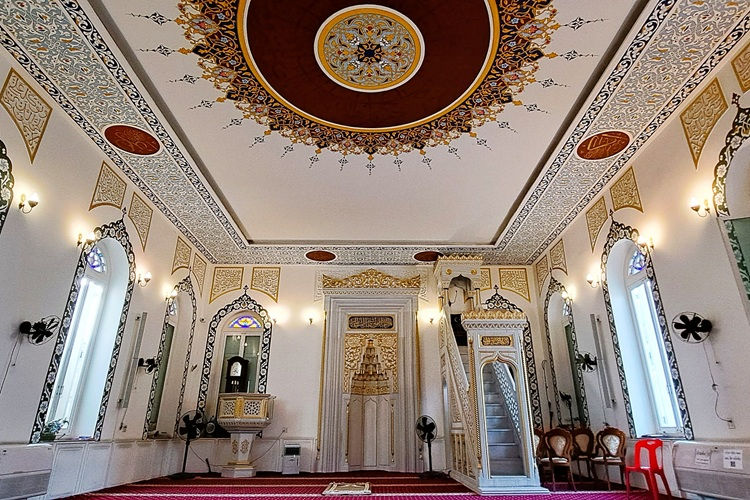
Chakraphong Mosque
The mosque’s origins date back to the early Rattanakosin period, when Muslim settlers—many of whom were traders, artisans, and government servants—established small communities within the expanding capital. Its location close to key historic landmarks such as the Grand Palace and Banglamphu highlights the integration of Muslim residents into the social and economic fabric of old Bangkok. Over time, the mosque has been rebuilt and renovated, but it continues to stand on a site long associated with Islamic worship and community life.
Masjid Darul Aman
The mosque emerged alongside the development of Bang Rak as a major trading and diplomatic quarter during the late 19th and early 20th centuries, when Muslim merchants, labourers, and expatriate communities settled in the area. Although the current structure has undergone renovations over time, the mosque’s roots are closely tied to these early urban Muslim networks that contributed to Bangkok’s growth as an international port city. The significance of Masjid Darul Aman lies in its role as a community-centered mosque serving a diverse and long-standing Muslim population in central Bangkok. Functioning as a place for daily prayers, Friday congregations, and religious learning, it continues to support both local residents and Muslim workers in the surrounding commercial districts.
Masjid Luang Kocha Itsahak
The mosque is associated with Luang Kocha Itsahak, a prominent figure who served the Siamese court during the reign of King Rama V as a Malay interpreter and official handling diplomatic and trade-related matters. The site originally functioned as a warehouse belonging to his trading enterprise, but as the commercial role declined, the land was transformed into a prayer space for his family and descendants. Over time, this evolved into the present mosque, which remains under the stewardship of his lineage. Unlike larger institutional mosques, it retains a more intimate, family-based character and has historically functioned as a community prayer house rather than a formally registered mosque. Architecturally, the building reflects a modest European-influenced style highlighting its origins as a converted commercial structure.
Masjid Haroon
The mosque was founded around 1837 by Haroon Bafadel, an Indonesian-Arab trader from Pontianak in Borneo who settled in the riverside community of Ton Samrong during the reign of King Rama III. Initially constructed as a simple wooden structure along the Chao Phraya River, the mosque served as the spiritual center of a growing Muslim merchant community engaged in regional trade between Siam, the Malay world, and the Indonesian archipelago. The surrounding neighborhood, id often referred to as Bangkok’s “Muslim quarter,” a reflection of Bangkok's multicultural landscape.
Masjid Bang Uthit
The mosque is closely tied to the development of the Bang Uthit area, which emerged during the late 19th and early 20th centuries as Bangkok expanded southward along the Chao Phraya River. Muslim settlers—many of whom were involved in river-based trade, dock work, and small-scale commerce—established tightly knit residential enclaves along this corridor.